
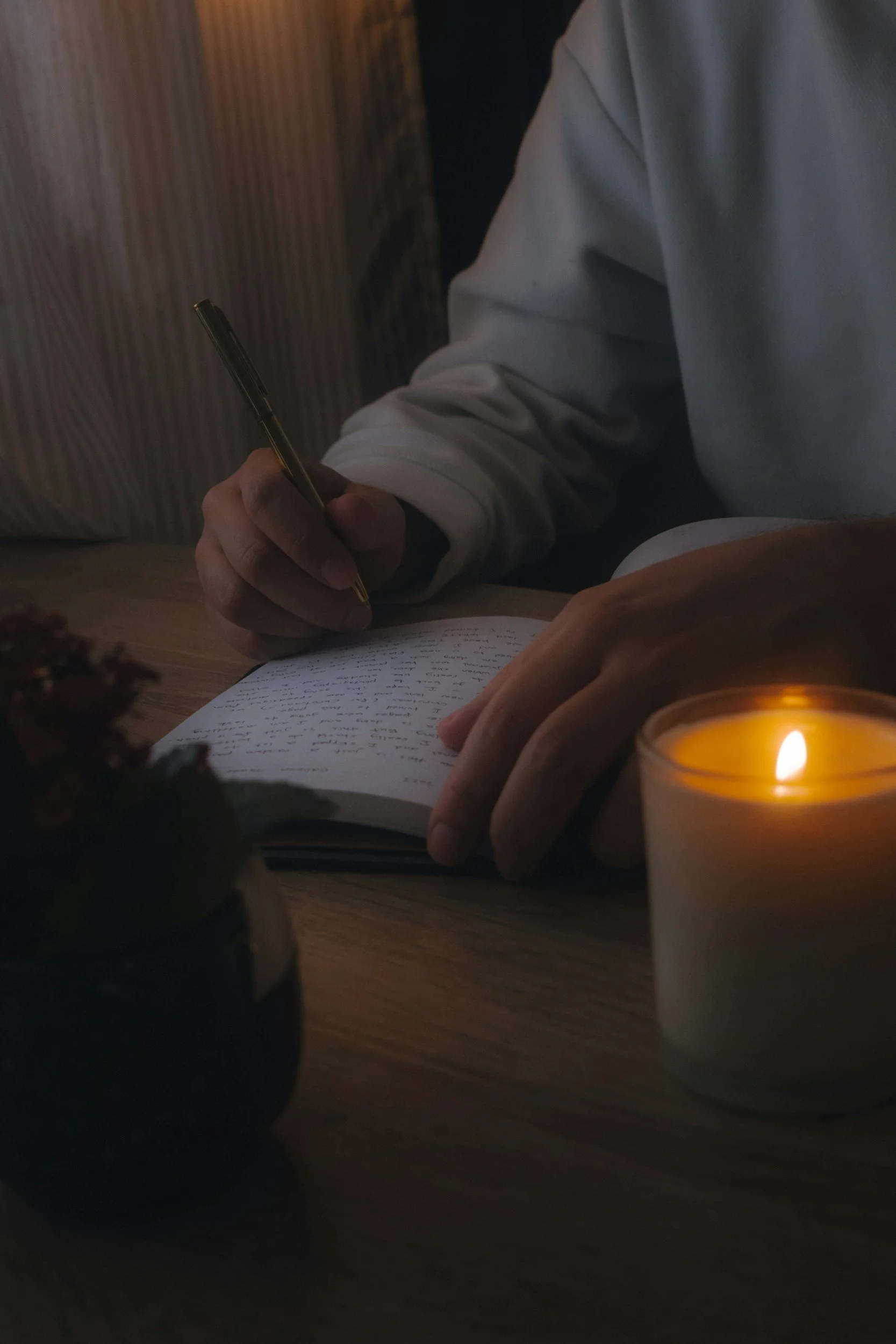
And my 4 favourite types of journalling for wellness, wonder and healing.
As a creative who has been ‘locked’ into a system which compromises her own health and happiness for most of her life, it’s not at all easy uncovering what you really need and who you really are. In fact it still takes lots of conscious work to repeal the layers of societal expectations that have been imposed on me and which, I strangely still feel compelled to uphold. So there is a kind of oscillation between performativity and authenticity that I find both jarring and somehow necessary, right now, for my life to function. I truly hope it won’t always be this way! But for now, this is how it is, and maybe you can relate to the fact that sometime you have to do things that are necessary in order to do the things that you absolutely need.
One way that I can attest to as being an absolute asset to reclaiming one’s own inner terrain is through the practice of journalling. And it’s important to note here that there are many different kinds of journalling practices that one can adopt, from future-self journalling to junk journalling. But I’d love to just share with you my 4 favourite types of journalling that I do actively practice which help cultivate wellness, wonder and healing. These are all part of my self care practice, and I intuitively will do whichever type depending on what’s going on in my life at any given moment.
A little bit about the evolution of Journalling
Along with Yin Yoga and meditation, I find journalling to be another beautiful practice that is a porthole into your own inner world: to your own thoughts, dreams, desires, and goals. Journalling has been used since antiquity as a way to record experience, thought, dreams, rituals, celestial observations and even the weather. Journalling was a way of noticing one’s world - both inner and outer - and a way of setting down in time the imprint that: I was here, this happened, I noticed, I matter. As humans evolved, journalling more and more became a way to record philosophical musings and thought. In fact, journalling as a way to reflect and examine became popular around the time of Epictetus and the Stoics. Seneca described his own personal reflective practice before going to bed, asking ‘what did I do today? Where did I act well? Where can I improve better tomorrow?’
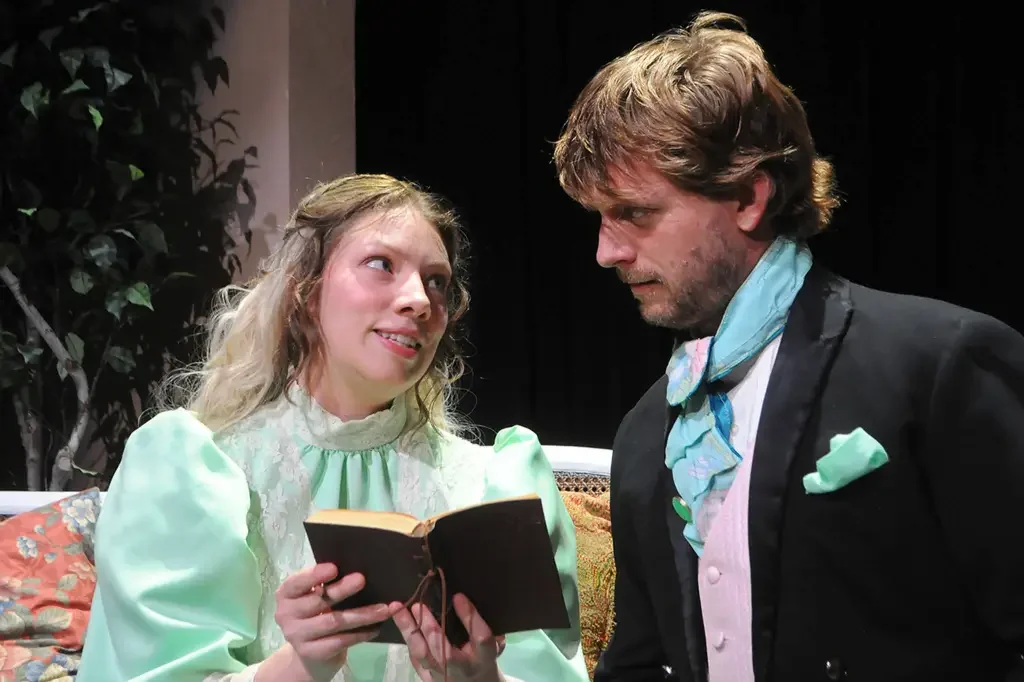
The personal diary really became a thing - especially for refined ladies - in the 17th, 18th and 19th centuries. It was a sign of one having an inner life, and for an inner life, one needed - well, the luxury of time. I can’t help but giggle when I recall teaching the play The Importance of Being Earnest to senior students one year, and how Wilde satirises the young ladies penchant for keeping a diary, by showing the amusing character of Cecily as a fanciful dreamer who runs away to write in her diary about her engagement to a man who is essentially a fiction. It’s not an idea that many contemporary young people really engage with. I mean, this is the age of social media, where one’s ‘inner life’ is crowded out by ‘tick tocks’ and viral trends.
Nevertheless, today, the journal has become most famously associated with people such as Anne Frank, Virginia Woolf, Anaïs Nin, Rainer Maria Rilke and Susan Sontag, and is used extensively by modern writers as a psychological practice used for personal development.
As you’ll read below, I use journalling for a variety of reasons, such as:
To process emotions, especially the challenging ones.
To understand myself, peeling back the layers of narratives and conditioning that I am attempting to address and/ or modify.
To examine beliefs, reflecting on things that I am integrating into my lived values.
To keep track of my cycle, habits and monthly events.
To work through personal experiences and plan possible future experiences.
To develop goals, mindsets and beliefs. I use journalling to create affirmations and sometimes even mottos, mantras of sayings.
To cultivate gratitude and keep a record of wonderful and/ or important moments.
To explore dreams and keep a ‘moon journal’.
To generate creative ideas and get ideas out of my head and down onto the page.
Anyway, here are my 4 tops picks for journalling, and how they are used.
Morning pages
In her 1992 book ‘The Artist’s Way’, Julia Cameron coined the term ‘morning pages’ to describe a journalling practice whereby every morning you write 2 pages into a journal. Her contention is that these morning pages lead to a kind of creative self-reclamation and access to a higher spiritual consciousness. And she is absolutely right.
There is nothing more powerful than reclaiming your own inner world and your own words, and morning pages are a wonderful tool to do just that. I would say morning pages are my top way to journal if you are seeking to reclaim all three of the above: wonder, wellness and healing.
bullet journalling
** my top pick for the quiet artist or aesthete **
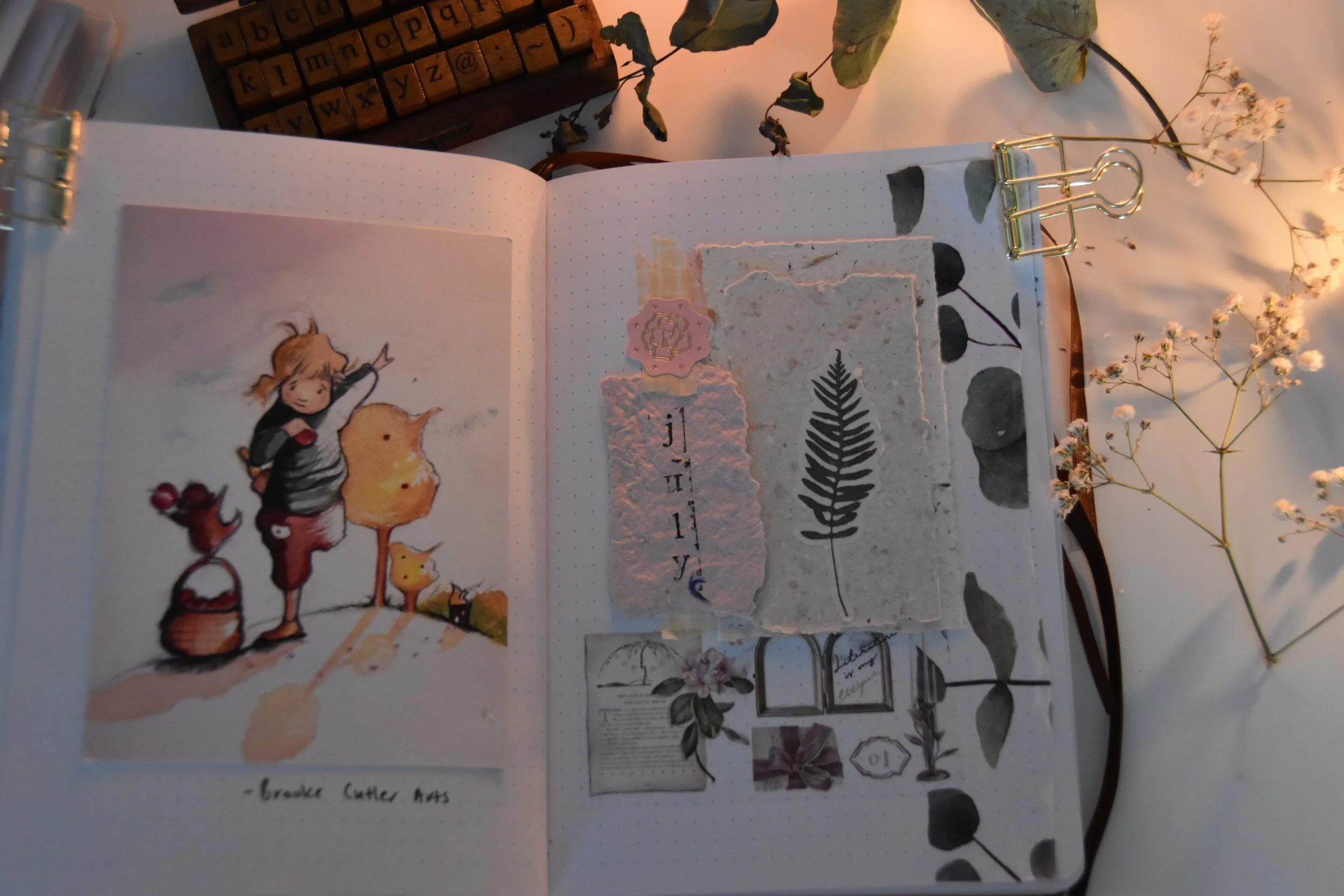
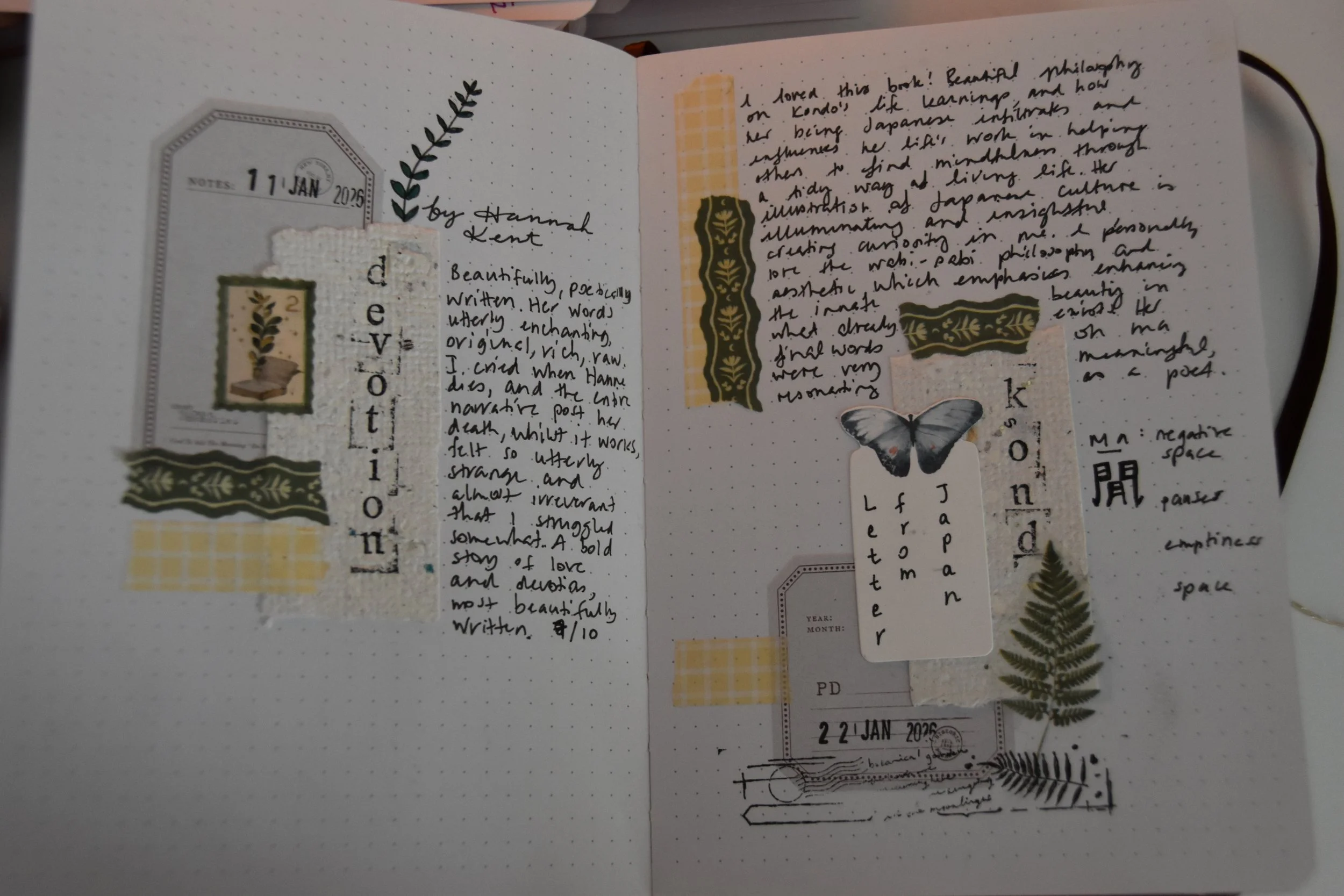
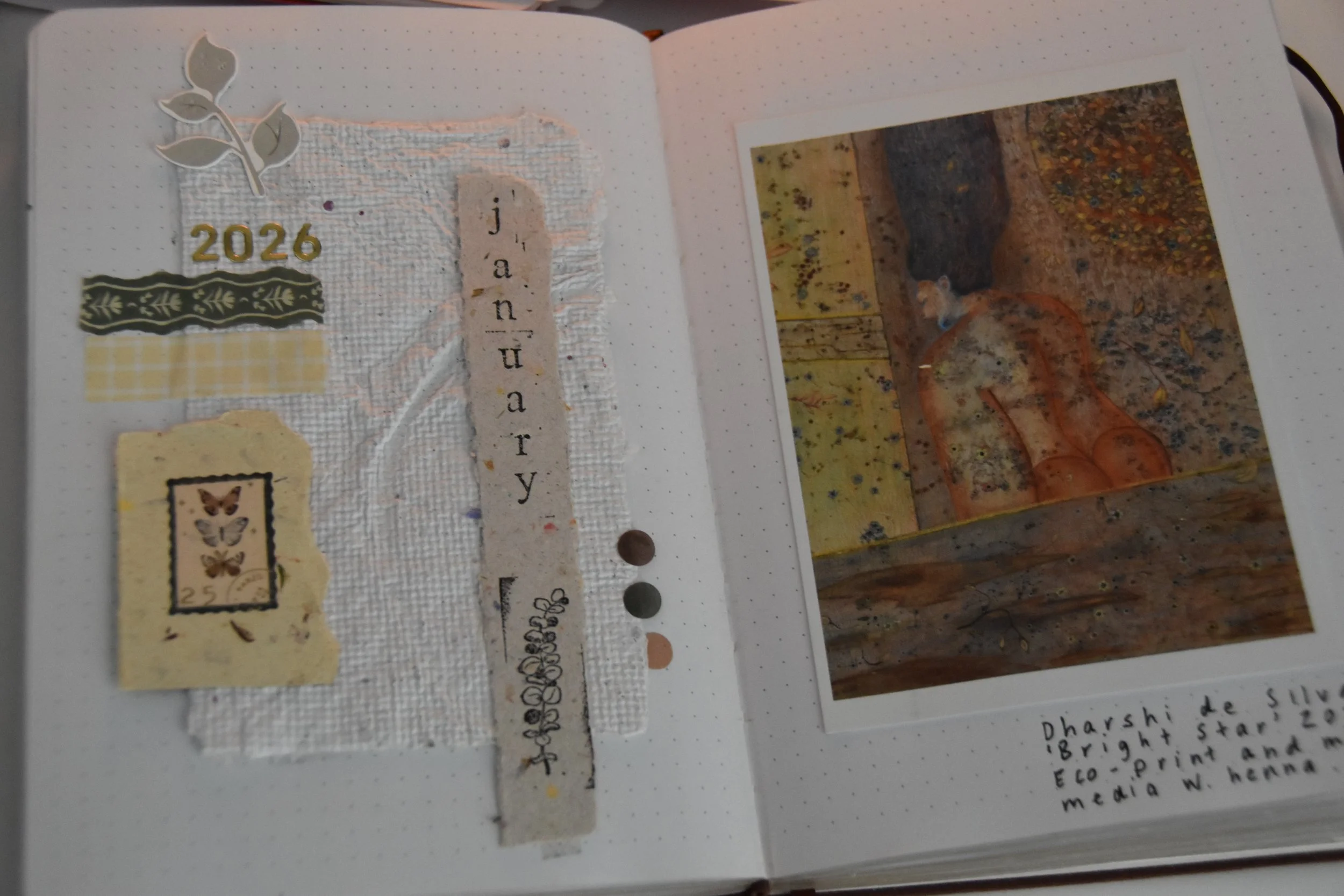
Bullet Journalling is a recent practice of mine and such a source of joy, pleasure and inspiration. For me, this is my journalling course to cultivate wonder.
Over the years I’ve tried things like scrapbooking (not for me - the format is just too big and there’s just too much stuff!) and junk journalling (I’m really not this much of a maximalist or hoarder or memorabilia); however, bullet journalling has afforded me the opportunity to keep a record of keepsake things and moments, and creatively experiment and play with things like stamping, washi tapes, layering (I love to use paint chips, handmade papers and bit of paper that come with packaging), drawing, stencilling and calligraphy. It’s also very practical for keeping a written record of all of your habits, to-do’s, events, calendars, monthly reflections, book reviews and anything that you just don’t want to lose track of.
I’m a huge fan of Notebook Therapy for my bullet journalling supplies, and I gifted my daughter with her first bullet journal - this gorgeous Matcha Bloom Travel Notebook Set - for her 11th Birthday, and she often journals before bed as a wind down routine. Bullet Journalling has now become something I share with my daughters, and we routinely bring out our journals to journal creatively together. Ahhh, bonding.
gratitude journalling
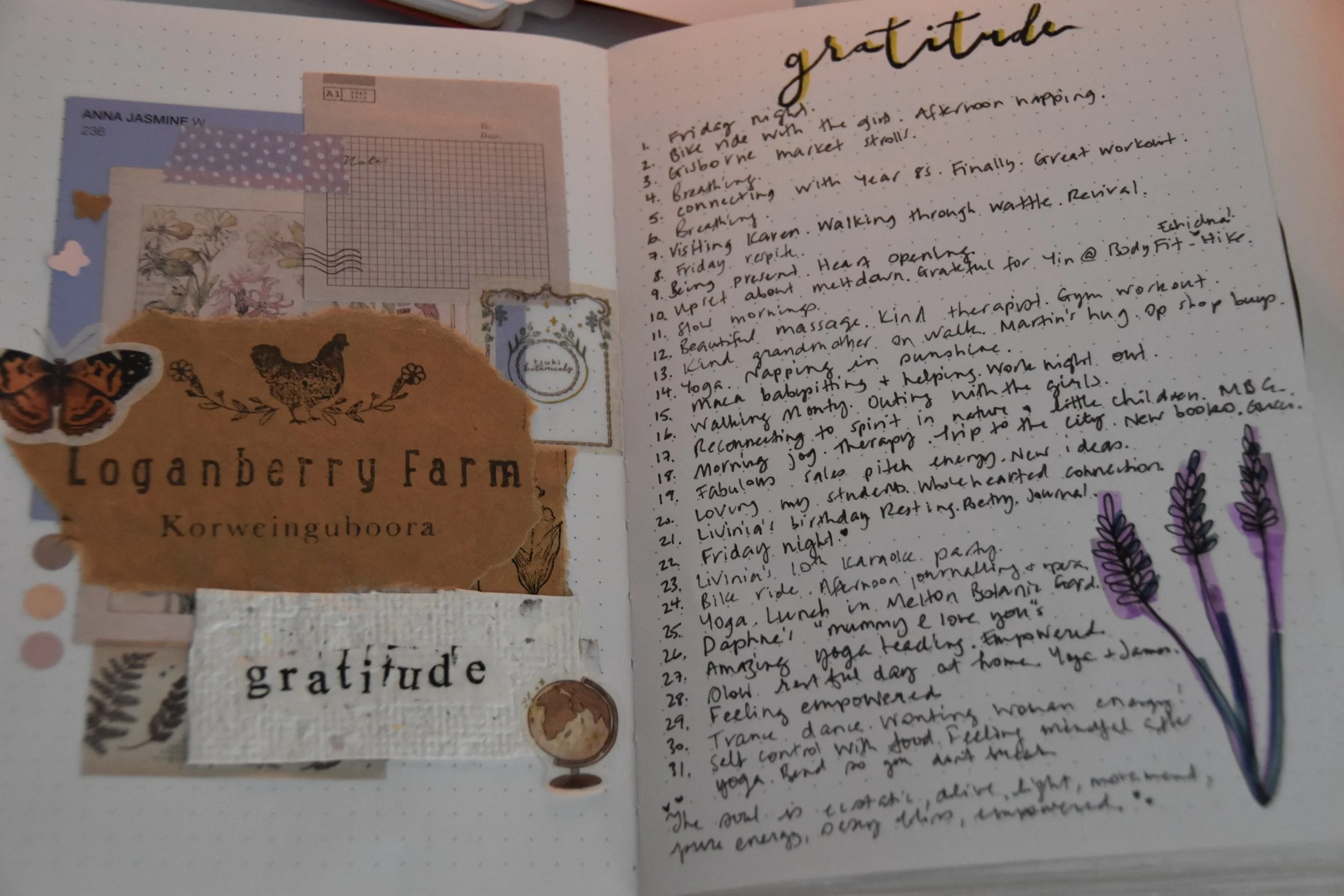
What I love the most about gratitude journalling is the run-on or snowball effect that it has on your wellness. It’s a feel good practice that becomes a keepsake record of all that’s beautiful about your life. It’s also the best way to re-wire your brain to ‘think positive’. It’s so easy to fall into the trap of thinking that there’s nothing good about your life. Gratitude Journalling challenges that mindset and becomes a bucket-filling exercise in all the things that you DO have to be grateful for, even if it’s a literal as simply having the opportunity to have a crack at yet another day on earth.
Gratitude Journalling is an embedded part of my bullet journalling practice as I am a passionate enthusiast of keeping physical hard records and love paper and stationary - but there are apps such as Presently and Delightful that are simply to use - and free!
Shadow Journalling
Shadow Journalling is something that I do when I am really needing a spiritual cleanse. It is part of my Write To Rise course and workshop, and something I unabashedly promote to my empowerment coaching clients.
Essentially, Shadow Journalling is a form of reflective writing based largely on the Jungian idea of the ‘shadow’: the parts of ourselves that we have pushed out of conscious awareness because they feel unacceptable, embarrassing, frightening, socially undesirable, or inconsistent with the person we believe we should be. It isn't about finding what's ‘wrong’ with you. It's about becoming curious about the parts of yourself you habitually hide away, deny, judge or disown.
Shadow Journalling, like Somatic Yin, is about being present, curious, vulnerable, and sitting in the discomfort as a way to cultivate compassion and a deeper level of self awareness that a lot of us feel very uneasy about doing. It’s not easy to be truthful about your insecurities and vulnerabilities! After all, we’ve learn to hide a lot of them in order to survive and avoid feeling ‘unloveable’ or different. But when those habits are no longer keeping you safe and are actually hurting you, Shadow Journalling is a practice that is powerful and very healing.
Places like BIG W actually stock some great Shadow Journals like this one by Kelly Bramblett. But if you would to be gently led a guide and have a community with whom you can share, feel connected and heard, maybe check out my course Write To Rise.